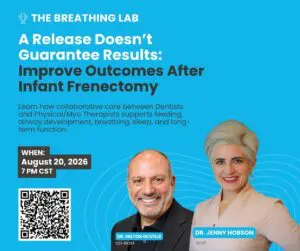

Pain in the neck and back can sometimes feel disconnected from dental or airway issues—yet the body doesn’t operate in isolation. As a specialist in head, neck, and TMD physical therapy, I’ve seen how jaw position, occlusion, breathing mechanics, and spinal alignment intertwine to influence pain and functional movement. This intersection is the foundation of our upcoming lecture, where we explore the role of the Intraoral Aqualizer® appliance and the importance of collaboration between physical therapists and dentists for patients with neck and back pain.
At the Hobson Institute, we emphasize a comprehensive approach: one that looks beyond symptoms to identify underlying contributors to pain and dysfunction. Jaw mechanics and occlusion are often overlooked factors in persistent neck and back discomfort. When the mandible is misaligned, or the bite is uneven, strain can travel up through the cervical spine and beyond, perpetuating tension and compensatory patterns throughout the body.
Why Physical Therapy and Dentistry Must Collaborate
During our lecture, I’ll share insights from my research on the Aqualizer® splint—an intraoral tool that helps diagnose malocclusion and its impact on posture and pain. This device offers a unique opportunity to assess how bite alignment affects muscle tension and spinal mechanics. But it’s not just about introducing a tool; it’s about creating a bridge between professions.
Dentists are in a powerful position to screen for musculoskeletal complaints during dental intake. When patients report neck, shoulder, or back pain, that information becomes critical. Referring these patients to physical therapists trained in airway, posture, and craniofacial mechanics ensures a complete evaluation. Likewise, PTs benefit from understanding occlusal position when addressing whole-body posture and pain.
What You Will Learn
Our session will cover key concepts that integrate anatomy, mechanics, and treatment strategies:
-
Upper Cervical Spine and TMJ Anatomy: A clear review of how the jaw and neck work together and how dysfunction in one area affects the other.
-
Mandibular Position and Spinal Alignment: How the upper cervical spine influences bite force distribution and occlusion, contributing to uneven muscle load.
-
Integrated Treatment Approach: A holistic plan that restores spinal curves, achieves neutral alignment of the atlas, jaw, and pelvis, and reduces craniocervical tension.
-
Airway-Focused Physical Therapy Strategies: Techniques such as nasal breathing instruction and posterior tongue-to-soft palate training, which can reduce clenching, grinding, and snoring.
These concepts are extensions of the work we do every day at the Hobson Institute—whether we are treating pediatric airway dysfunction, adult TMD, or postural imbalance. They reflect a treatment philosophy that addresses function from the inside out.
About Dr. Jenny Hobson
I trained in Europe in manual therapy, craniofacial rehabilitation, and advanced breathing and posture techniques. I am one of only two physical therapists in the United States selected to teach Dr. Mariano Rocabado’s methods through the University of St. Augustine for Health Sciences. My ongoing education in TMD, Buteyko breathing, spinal posture correction, and airway rehabilitation informs every aspect of patient care.
At the Hobson Institute—across our three Chicago locations—I treat both adults and pediatric patients. In addition to one-on-one care, I offer online courses for patients and medical providers on airway identification, TMD treatment, sleep-disordered breathing, and related issues. My Intro to Airway Evaluation & Treatment course is specifically designed to equip healthcare professionals with the skills needed to evaluate and treat airway-compromised patients.
Who Should Attend
This lecture is ideal for:
-
Physical therapists (PTs, PTAs)
-
Dentists and dental hygienists
-
Medical professionals interested in integrated pain and airway care
One continuing education (CE) credit is available to AAPMD members.