
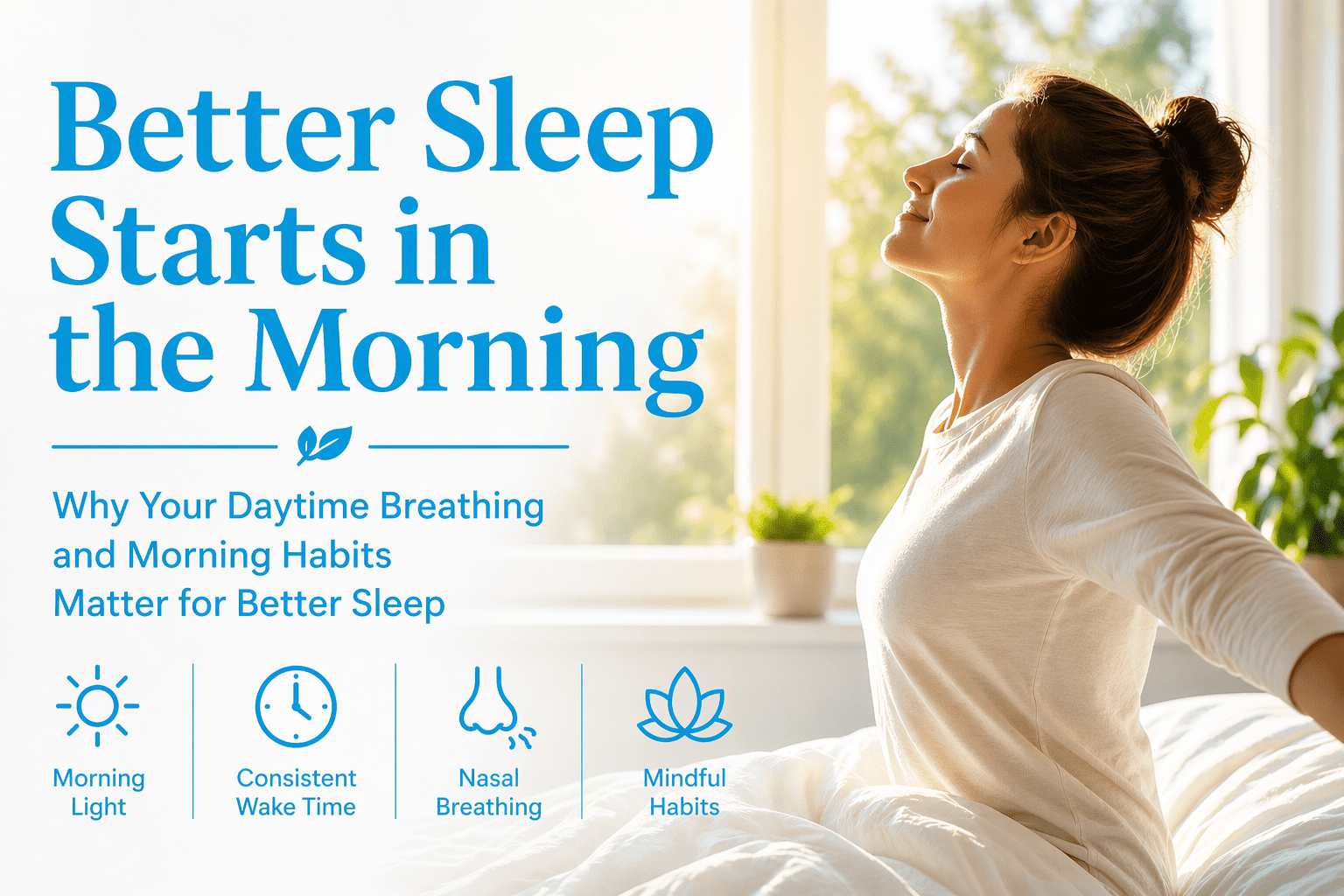
Not getting enough sleep is more common than most people realize. In fact, over a third of adults in the U.S. sleep less than six hours a night. And poor sleep is about more than just feeling tired the next day. It can affect your mood, focus, heart and metabolic health, immune function, and even how well you breathe while sleeping. (cdc.gov)
At the Hobson Institute, we’ve found that many people struggle with sleep not just because of habits or stress, but because of airway and breathing patterns. How you breathe during the day – through your nose or your mouth, shallow or deep – can have a big impact on sleep quality. The good news? Small adjustments can make a noticeable difference.
Start Your Day With Light
One of the simplest ways to improve your sleep is to get morning sunlight. Natural light soon after waking helps your body recognize it’s daytime, boosting alertness and signaling your breathing patterns to settle into a healthy rhythm. Even something as simple as opening the curtains or stepping outside for a few minutes can set your body up for better, more restful sleep later.
Keep a Consistent Wake Time
Waking up around the same time every day, even on weekends, helps your body establish a reliable routine. For your breathing, this routine can stabilize airflow patterns while you sleep, which is especially important for people who snore or have mild sleep-disordered breathing. Over time, this consistency supports deeper, more restorative sleep.
Pay Attention to Your Breathing Habits
Many people don’t realize that how they breathe during the day affects how well they sleep at night. Encourage patients (or yourself!) to notice:
- When you wake up
- How you breathe during the day (nose or mouth)
- Snoring or waking during the night
- How refreshed you feel in the morning
These simple observations can reveal breathing or airway issues that might be disrupting sleep. Many patients benefit from nasal breathing exercises and mindful daytime breathing, which improve oxygen flow and reduce nighttime awakenings.
Should we put any of what I normally recommend for sleep here?
- Wear a breathe right or internal dilator such as the Intake or MUTE to help open up the nose and reduce upper airway resistance. This will reduce the vacuum effect that is created with upper airway resistance and collapse of the pharynx and airway soft tissues.
- Keep your tongue in slight suction on the roof of the mouth by placing the tongue in the “N” position and then closing the mouth and swallowing. This will create a vacuum and allow the tongue to help stabilize the airway and reduce instability and collapsibility of the airway during sleep.
- Work on slowing down your breath and making the volume as light as possible. Many of us don’t realize that they fall asleep breathing very fast and shallow and sometimes through the mouth. It is important to use your nose so that the proper volume is injected into the lungs. Mouth breathing also activates the accessory compensatory neck and chest muscles to breathe which will cause chronic neck tension. Restoring nasal breathing that is light and gentle with the appropriate volume is critical to sleep quality with the tongue in light suction.
Even small changes like morning light, consistent wake times, and mindful breathing, can create a ripple effect that improves sleep, energy, and overall health. By paying attention to the way we breathe and start our day, we can set the stage for better nights and brighter mornings.